
Last updated November 21, 2026
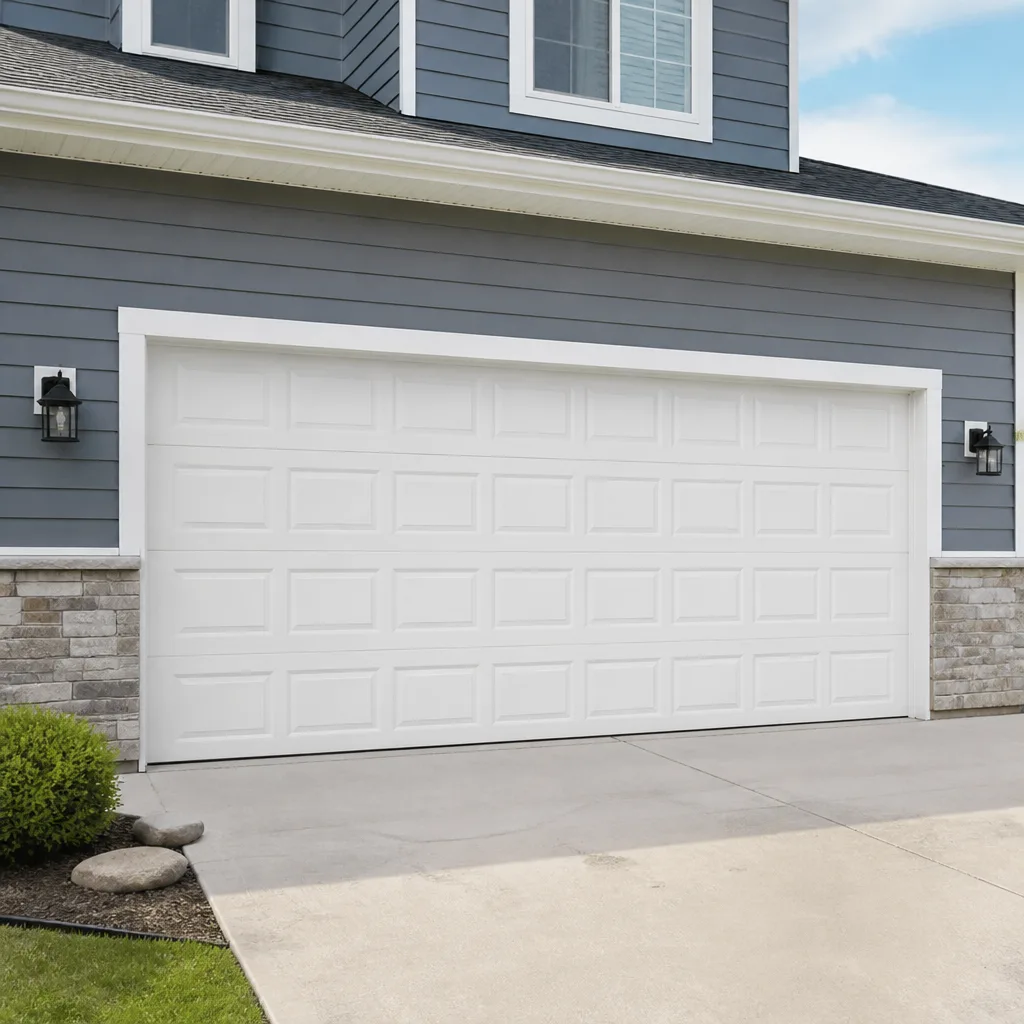 Raised-panel steel
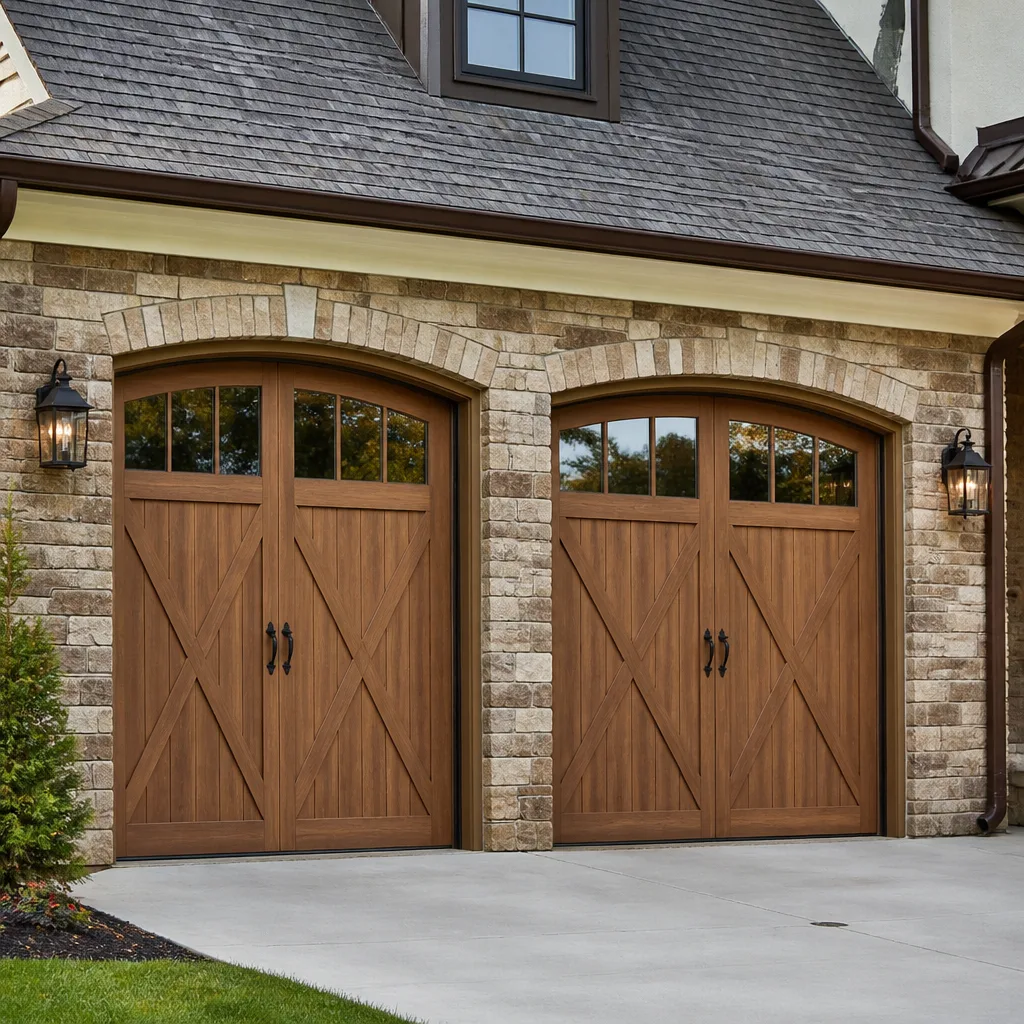 Carriage house
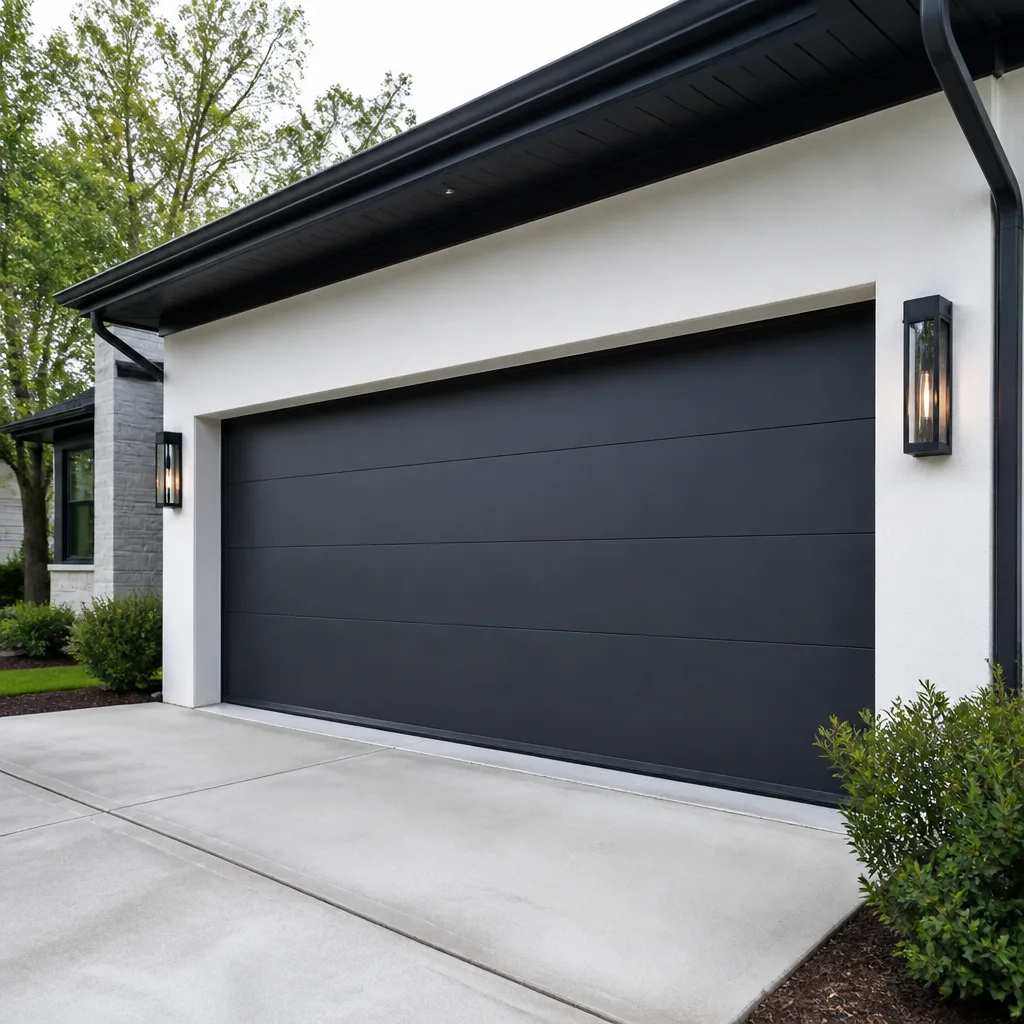 Modern flush
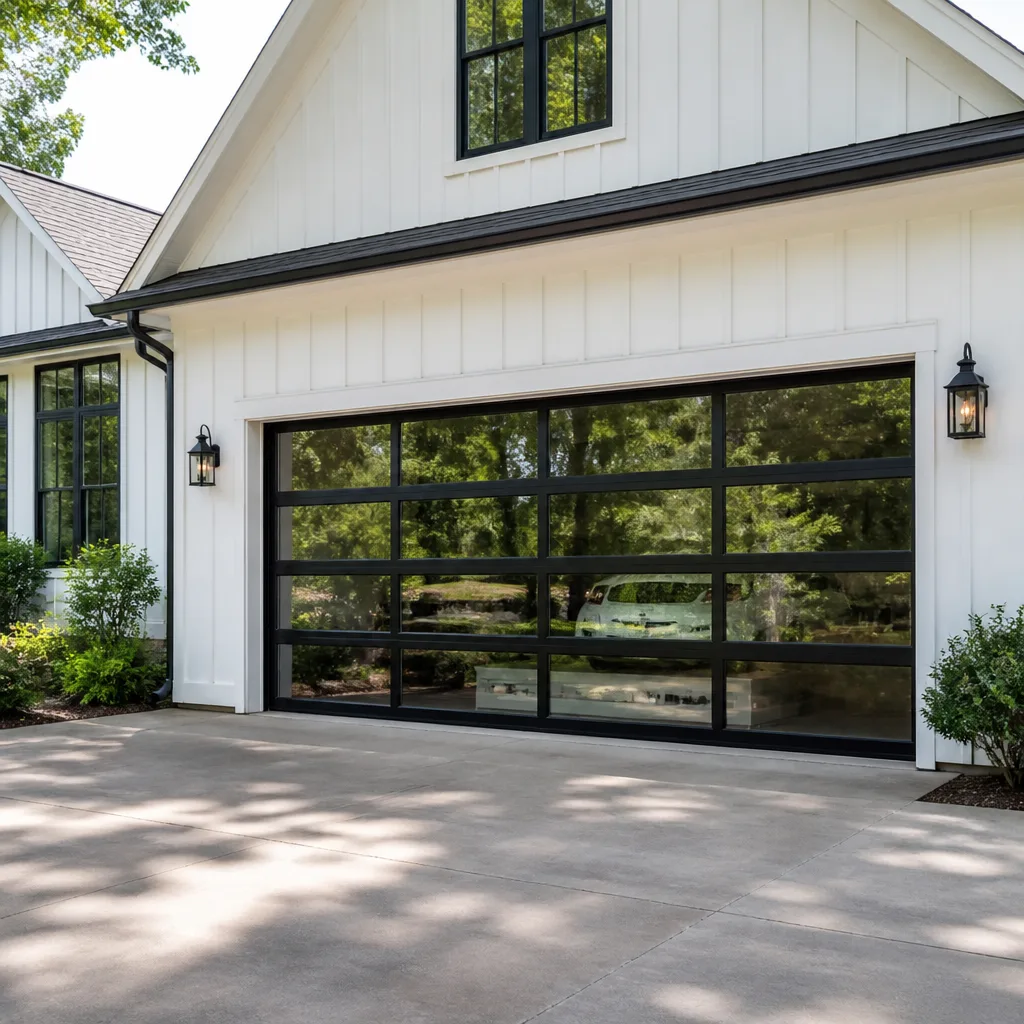 Full-view glass
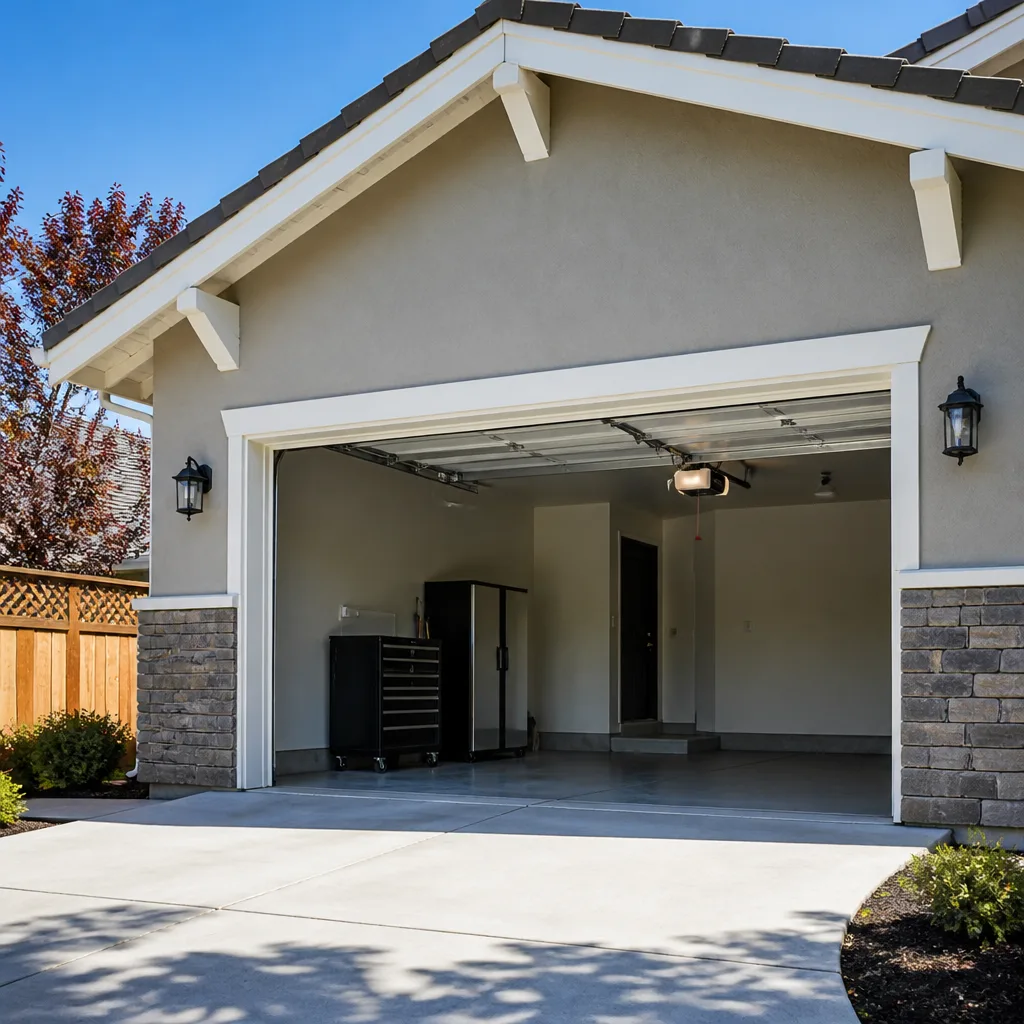 LiftMaster openers
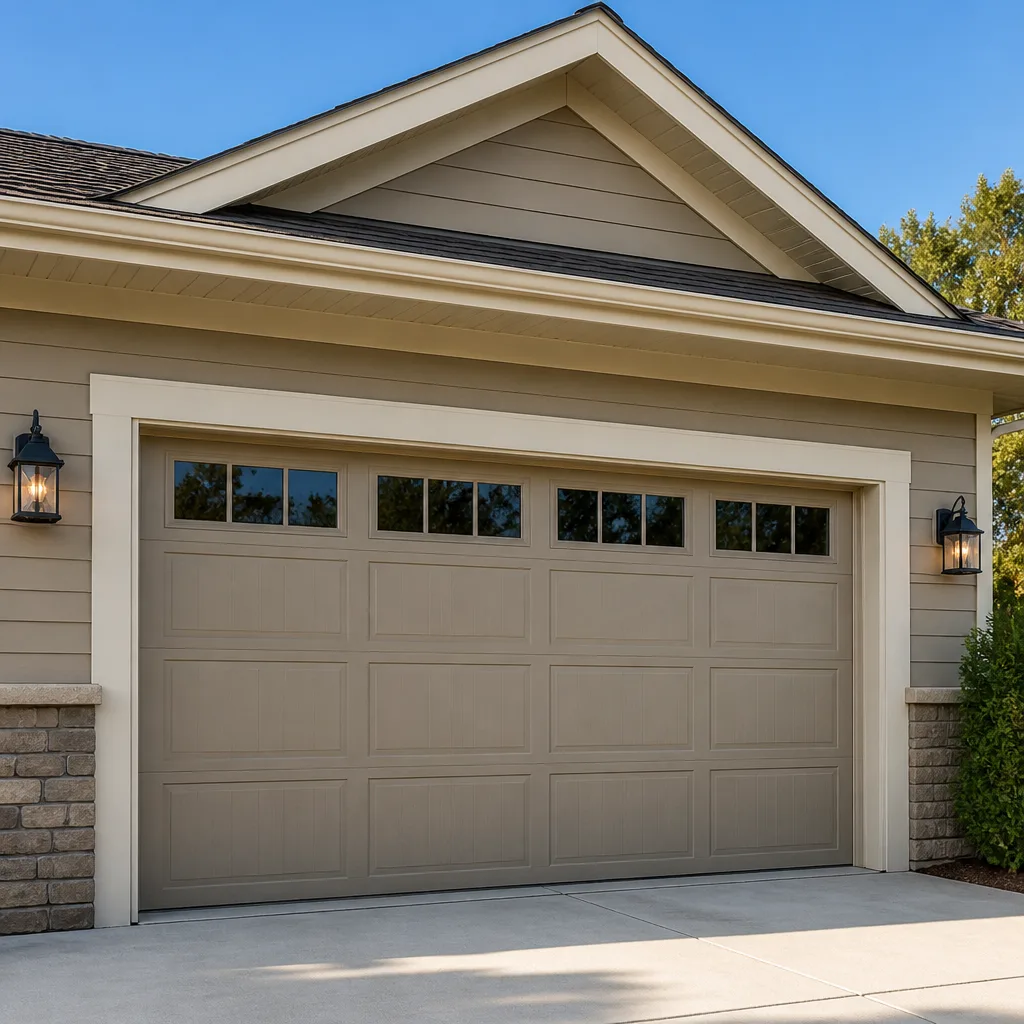 Chamberlain openers
Full 25-point door and opener safety check with every visit - springs, cables, rollers, tracks, and your LiftMaster or Chamberlain opener included
You get a price before we start. It does not change when the pro arrives.
Get your free estimateThe Complete Guide to Garage Doors in Canton
Most Canton homes were standing long before the low-headroom bracket became standard equipment, and that single fact changes almost every door decision in this neighborhood. We’ve walked into garages where a previous installer bolted a standard opener to a ceiling that never had the clearance for it, then sold the homeowner a “premium” door that bangs the header every time it cycles. If the person quoting your job doesn’t pull out a tape and measure your header clearance before writing a number, they haven’t done this zip code before. This guide covers what actually matters here: how Canton’s housing stock shapes door sizing, which materials survive the summers, how HOA rules in this part of Baltimore steer your style choices, and how to pick a system that can still get parts when it breaks.
Quick Answer
Garage doors in Canton are shaped by three local realities: tight row-house footprints and low header clearances that limit door height and opener mounting, humid harbor summers that punish cheap steel and untreated wood, and HOA design rules common in Canton and Patterson Park-adjacent communities that restrict color and panel style. The right door for a Canton home is measured, not guessed. A free in-person measure and a written estimate are the only way to know what your specific garage can take.
Styles & brands we work with
- Raised-panel steel
- Carriage house
- Modern flush
- Full-view glass
- LiftMaster openers
- Chamberlain openers
Table of Contents
- How Canton’s Housing Stock Shapes Your Door
- Which Door Materials Hold Up in Canton’s Climate
- HOA Rules and Style Choices in Canton
- Alley-Facing Garages: Seals That Actually Work
- Choosing an Opener for a Canton Garage
- Brand Serviceability: What We Can Get Fast
- What Garage Door Work Costs in Canton
- A Yearly Maintenance Checklist
How Canton’s Housing Stock Shapes Your Door
Canton’s dominant housing type is the Baltimore row house, and row houses were designed around the alley, not the car. What that means for a garage door is simple: the opening tends to be narrower and shorter than what you’d find on a suburban lot, and the ceiling above it usually sits lower than modern door hardware assumes. When we look at a garage in Canton, the measurements that matter most are header clearance (the space between the top of the door opening and the ceiling), side clearance (the room to the left and right of the opening for the tracks), and backroom (how far the door travels back into the garage when it opens).
Many of these homes have garage openings that were sized for a single older vehicle, and current trucks and SUVs often don’t clear comfortably. That doesn’t mean you’re stuck. It does mean you need a door and track system chosen for the actual dimensions, not a standard catalog size.
- Header clearance under 12 inches: a low-headroom bracket and a torsion spring setup mounted at the header are usually the workable path. A standard torsion tube mounted high on the wall won’t fit.
- Narrow side clearance: low-profile track and narrower end plates keep the door from scraping the jamb.
- Short backroom: a low-clearance or high-lift configuration depending on the ceiling angle.
- Door height under 7 feet: confirm before ordering panels, since panel heights are cut at the factory and can’t be modified on site.
If any of these constraints sounds like your garage, the measure has to happen before a quote, not after. An installer quoting a standard 7-foot door for a 6-foot-8 opening is quoting a door that will be modified or returned.
Which Door Materials Hold Up in Canton’s Climate
Canton summers are humid, and the humidity sits inside the garage rather than blowing through. A cheap 24- or 25-gauge steel door will still sweat at the bottom, and untreated wood will swell at the bottom rail first. What holds up here is a door built for moisture from the start.
Insulated steel. The most common and most sensible choice for Canton. Two-layer steel with a polystyrene or polyurethane core resists the surface condensation that uninsulated single-layer steel gets in summer. Look at the gauge, not just the price: 24-gauge steel is the standard for a residential door, and thinner is a downgrade hidden behind the finish.
Composite and steel-backed wood. If your HOA or your taste calls for a wood-look door, a steel-backed composite or a factory-primed wood door with a sealed bottom rail will outlast raw kiln-dried wood. Wood doors in Canton need re-painting on a shorter cycle than steel, and the bottom rail is the failure point if it isn’t painted and sealed.
Aluminum and glass. Full-view aluminum doors are attractive on modernized rehabbed homes in Canton, but the glass choice matters more than the aluminum. Insulated glass or clear polycarbonate panels stop the greenhouse heat in summer. A single-pane glass door facing west in a Canton alley is a solar oven.
What to avoid here. Single-layer uninsulated steel, raw MDF-backed carriage doors, and any door whose bottom rail isn’t factory-coated. These are the ones we see fail first in a humid Baltimore summer, usually at the bottom corners where water sits longest.
HOA Rules and Style Choices in Canton
Canton and the blocks that run toward Patterson Park include a good number of HOA-governed communities, and most of them do care about the garage door because it’s a large, visible surface. The rules vary by association, so the first step is always to get your community’s current design guidelines in writing before you order anything.
What tends to come up across these communities:
- Color palettes. Many associations restrict exterior colors to a defined palette, and door color is treated as an exterior color. A black door isn’t automatically approved even though it’s common.
- Window and panel layout. Carriage-style versus raised-panel versus flush is often specified. Adding windows to a door can require an architectural review request.
- Material restrictions. Some associations restrict visible glass or specific finishes on doors facing a common area.
- Hardware. Decorative hinges and handles that mimic carriage door style are sometimes permitted, sometimes prohibited as non-functional ornament.
Get the approval before the order. A door removed after install because it wasn’t approved is a cost nobody wants, and manufacturers don’t take returns on installed doors.
Steps to stay HOA-compliant
- Request the community’s architectural guidelines and any approved door styles from the HOA or property manager.
- Write down the exact door model, material, color, and window layout you’re considering.
- Submit the architectural review request with the spec sheet and a photo of the current door.
- Wait for written approval before any deposit is paid or any door is ordered.
- Keep the approval letter on file; if the community changes management, you’ll want the paper trail.
Alley-Facing Garages: Seals That Actually Work
An alley-facing garage in Canton lives in a different environment than a front-facing one. The alley is narrower, the ground slopes toward the door more often, and everything from rainwater to grit gets thrown at the bottom seal. That’s why the bottom weather seal on an alley door is a maintenance item, not an accessory.
A good bottom seal here is a thicker, replaceable rubber astragal, not a hollow vinyl tube. Rubber holds its shape through heat and cold and doesn’t crack when the door presses down on grit and gravel. Hollow vinyl is cheaper and often what comes stock, and it’s also the first thing to tear and the last thing anyone replaces until water is already in the garage.
Side and top seals. Side jambs on an alley door get more wind-driven rain than a front door in a driveway, so a brush seal or a vinyl bulb seal on each jambs matters. A small gap on each side adds up.
The threshold. This is the part most people skip. An aluminum threshold with a rubber insert slows water moving from the alley into the garage floor. If your alley door sits below the grade of the alley, a threshold plus a proper bottom seal is the practical defense; a bottom seal alone can’t stop standing water.
What to check yourself. Close the door and look along the bottom edge for daylight. Then check the sides. Any visible gap in a Canton alley door is a leak waiting for the next summer storm.
Choosing an Opener for a Canton Garage
An opener is not a universal fit. In a Canton row-house garage, the ceiling is often lower and the mounting options are fewer, which rules out some of the larger belt-drive units before you even get to brand preference. What you can choose freely is the drive type and the smart-home setup.
Chain drive. Loud but reliable and the least expensive. On a detached garage or an alley garage where noise doesn’t reach the house, a chain drive is a sensible choice.
Belt drive. Quieter and the right call for an attached garage where the opener sits below a room someone uses. Belt drives cost more than chain drives and need a bit more room at the header for the belt bracket, so check the clearance first.
Jackshaft (side-mount) opener. This is the one that solves most low-headroom Canton garages. Instead of mounting to the ceiling, the jackshaft mounts beside the torsion spring and turns the torsion tube directly. No ceiling mounting needed. It’s the right tool for a garage where a ceiling-mounted rail wouldn’t clear.
Smart openers. LiftMaster and Chamberlain units with built-in Wi-Fi or MyQ compatibility, Genie’s newer smart models, and Craftsman’s connected units all allow remote monitoring from a phone, which matters in an alley garage where you can’t see the door from the house. If you already have one of these and it’s acting up, a garage door opener repair visit can often fix a network or sensor issue rather than replace the unit.
One thing we check on every opener we look at in Canton: whether the safety-reversing sensors are aimed correctly. Mounting points shift on older wood jambs, and a misaligned sensor is a common reason a door won’t close.
Brand Serviceability: What We Can Get Fast
Most of the brand conversation in this niche is about features. The conversation that matters in Canton is parts availability. A door from a brand whose parts are back-ordered for weeks is a door that stays half-fixed in a garage that’s the primary entry point. Our experience is that the eight major brands we work with daily – LiftMaster, Chamberlain, Genie, Clopay, Amarr, Wayne Dalton, Craftsman, and Raynor – are serviceable locally with far more consistency than the off-brand doors we get called out to.
Where we see friction:
- LiftMaster and Chamberlain share a lot of internal architecture on the opener side, so parts and diagnostics cross over. Both are broadly stocked.
- Genie openers have their own logic boards and sensor patterns. A technician who knows LiftMaster doesn’t automatically know Genie, and vice versa.
- Craftsman openers are common in Canton garages because they were sold at retail for decades. Parts are still available, though the older models sometimes need a matched sensor pair rather than a single sensor.
- Clopay and Amarr doors are both widely used in this market and well-supported. Panel sections in common colors are usually obtainable; custom colors and discontinued styles are the delays.
- Wayne Dalton and Raynor are solid and serviceable, though specific decorative hardware and certain discontinued panel profiles take longer to source. If your door is a Wayne Dalton with a specific model number, bring the number when you call.
The practical takeaway: brand familiarity is not marketing. It’s whether the person on the other end of the phone recognizes your model number and knows what typically fails on it. The Canton Garage Door Repair Pros approach is to diagnose against the brand rather than against a generic replacement schedule.
What Garage Door Work Costs in Canton
Prices in Canton track the wider Baltimore market within a narrow band, and what drives the number more than anything is brand, size, and whether the door is a special order. Typical ranges below are estimates and give you a feel for what to budget. The written estimate sets the final price.
- Torsion spring repair, single spring: $180 – $340
- Torsion spring replacement, matched pair (recommended when both are the same age): about twice a single spring, $360 – $680
- Extension spring replacement, which is a different setup from torsion: typically lower per-spring than torsion, but our guide prices this per job by estimate
- Opener repair: varies by part; quote is set per job
- Opener replacement, standard ceiling-mount: quote set per job, and belt drive runs higher than chain drive
- Single new door, insulated steel, standard size: measure and written quote are free
- Panel replacement: quote set per job; depends on profile and color availability
Two things we always tell a Canton homeowner:
- The price you’re quoted in writing before work starts is the price you pay. We don’t reprice at the end of the job.
- If the same-age pair of springs fails on one side, replacing both at once is usually the lower-cost path over a year or two, even though the one-day number is higher. A single spring replacement is fine when only one is failing and the other is newer.
One more: on a garage door installation the quote is set after a measure, not over the phone. Any company pricing a full door install without seeing your header clearance hasn’t seen a Canton row house.
A Yearly Maintenance Checklist
A garage door that’s checked once a year lasts far longer than one that only gets attention when it’s broken. This is the list we’d hand to a Canton homeowner.
- Inspect the springs. Look at the torsion springs above the door (or the extension springs along the sides). Rust, a visible gap in the coil, or a loud snap when the door starts to lift is a spring issue. Do not touch them; torsion springs are under heavy tension.
- Test the safety reverse. With the door fully open, place a small object (a roll of tape works) in the door’s path and close it. The door should reverse on contact or on breaking the sensor beam. If it doesn’t, that’s a repair item.
- Lubricate the moving parts. Rollers, hinges, and the torsion bar get a garage door lubricant, not WD-40. Once a year is enough in this climate.
- Check the balance. Disconnect the opener and lift the door halfway. If it stays put, it’s balanced. If it drops or rises on its own, the springs or cables need attention and you should call before using the opener.
- Look at the bottom seal. Especially on an alley door. Any daylight or visible tear under the edge means the seal is done.
- Check the bolts on the hinges and track. Loose bolts on wood jambs are common after a humid summer.
- Clear the tracks. Small stones and grit from an alley find their way into the track. A shop vacuum along the track channel once or twice a year keeps the rollers from jumping.
Anything on that list that touches springs, cables, or the torsion bar should be a call, not a repair. More on that below.
Common Mistakes to Avoid
- Quoting a door before measuring the header. Canton row-house garages rarely have standard clearances. An installer who quotes a 7-foot door without measuring is going to modify it or return it, and either one costs you time.
- Replacing the door when the spring is the problem. A door that’s become hard to lift or has stopped going up is often a spring, not a door. Ask what specifically failed before agreeing to a full replacement.
- Choosing a chain-driven opener for an attached garage bedroom wall. The noise is tolerable on a detached or alley garage. It isn’t when the opener sits below a bedroom. Belt drive or a jackshaft solves it.
- Ordering a door before HOA approval. Many Canton and Patterson Park-adjacent communities restrict color, panel style, and window layout. Approval in writing first, order second.
- Using hollow vinyl for an alley door’s bottom seal. It tears on grit and gravel in a single season. A replaceable rubber astragal costs little more and lasts.
- Ignoring the warning signs on a torsion spring. A visible gap in the coil, a loud snap, or a door that lifts a few inches and stops is a spring that’s failed or about to. Spring tension is not a hobby-repair item.
- Buying an off-brand door to save money. Panel sections and hardware for lesser-known brands become unavailable quickly, and a door that can’t get a panel is a door that gets fully replaced far sooner than necessary.
See the difference
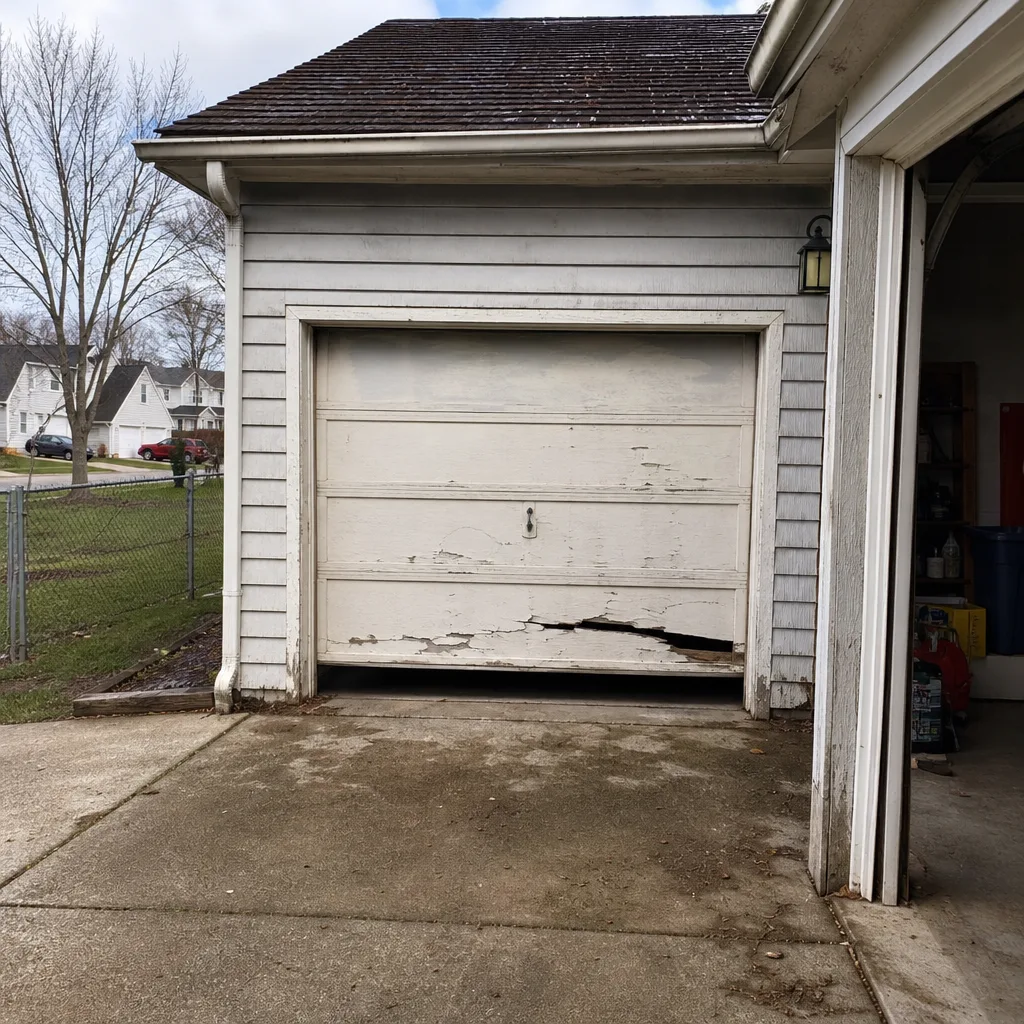 Before
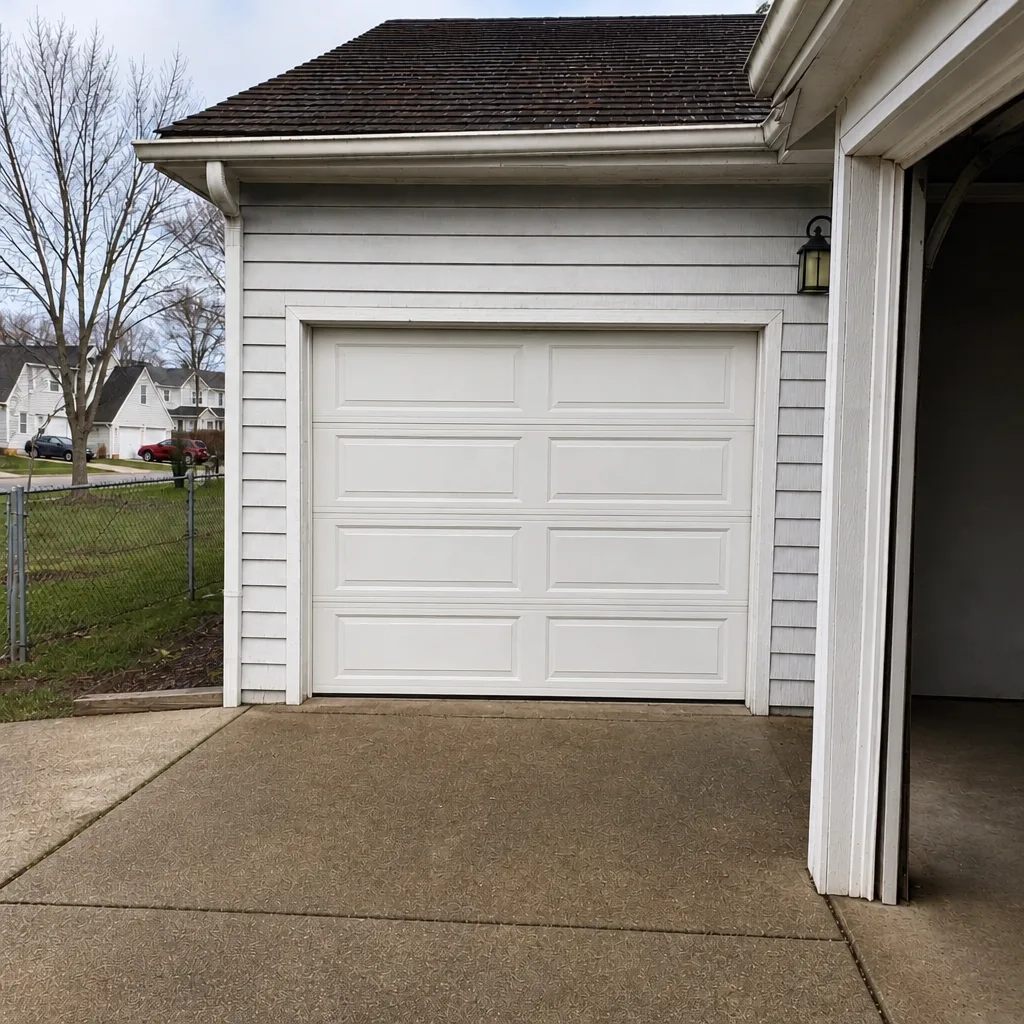 After
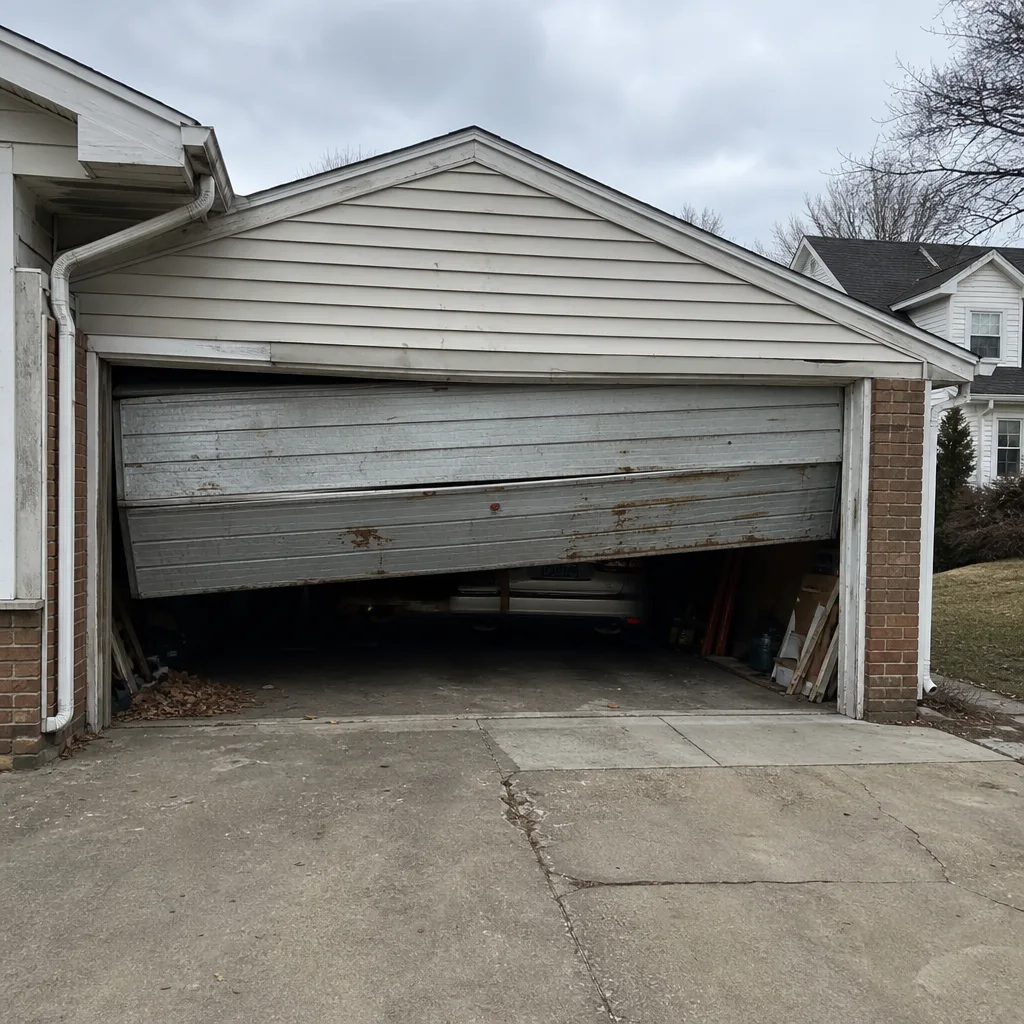 Before
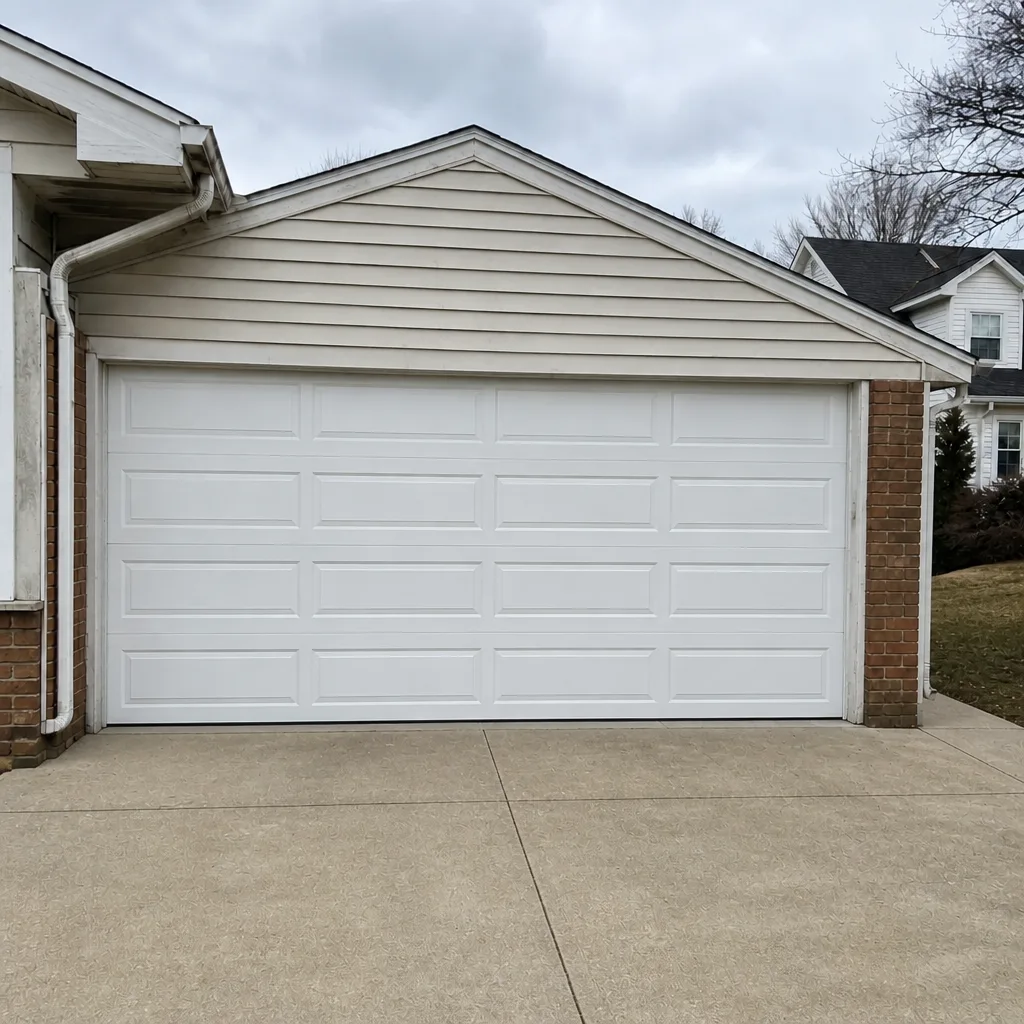 After
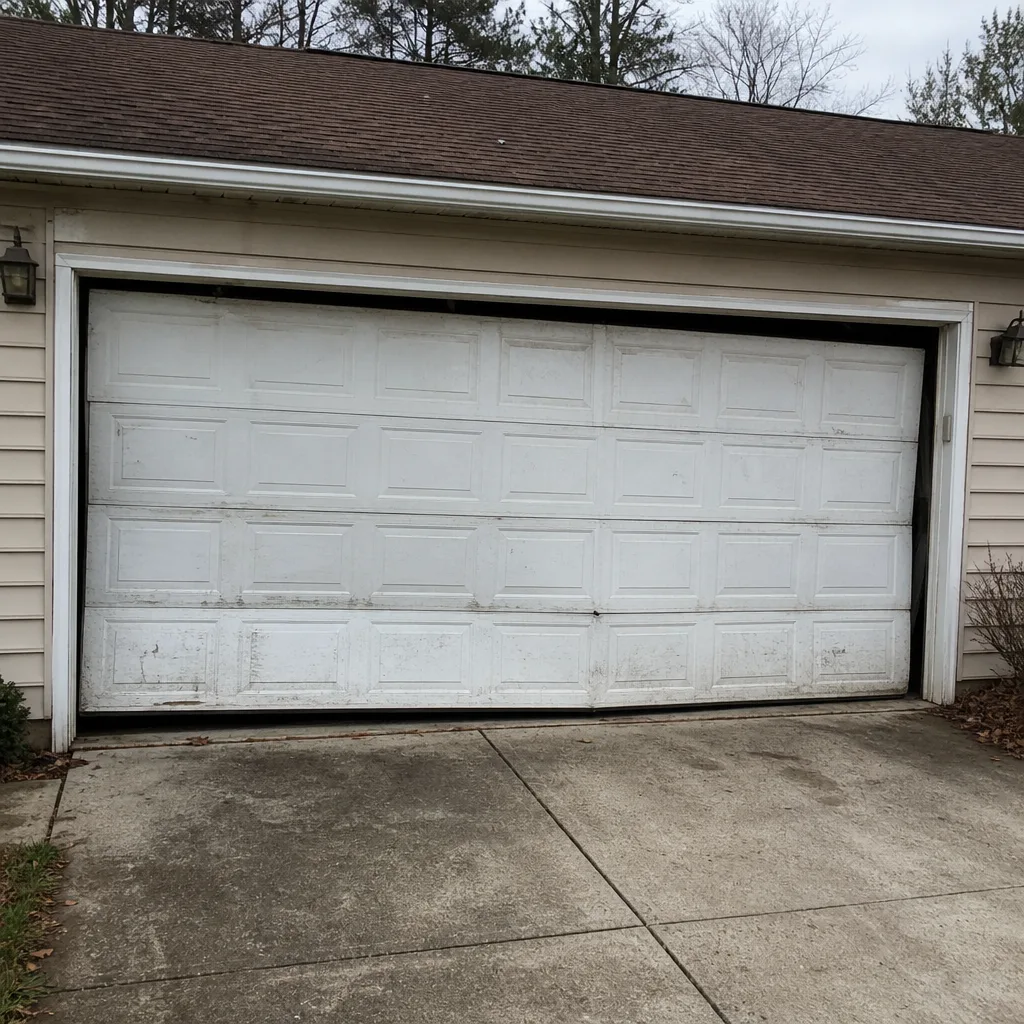 Before
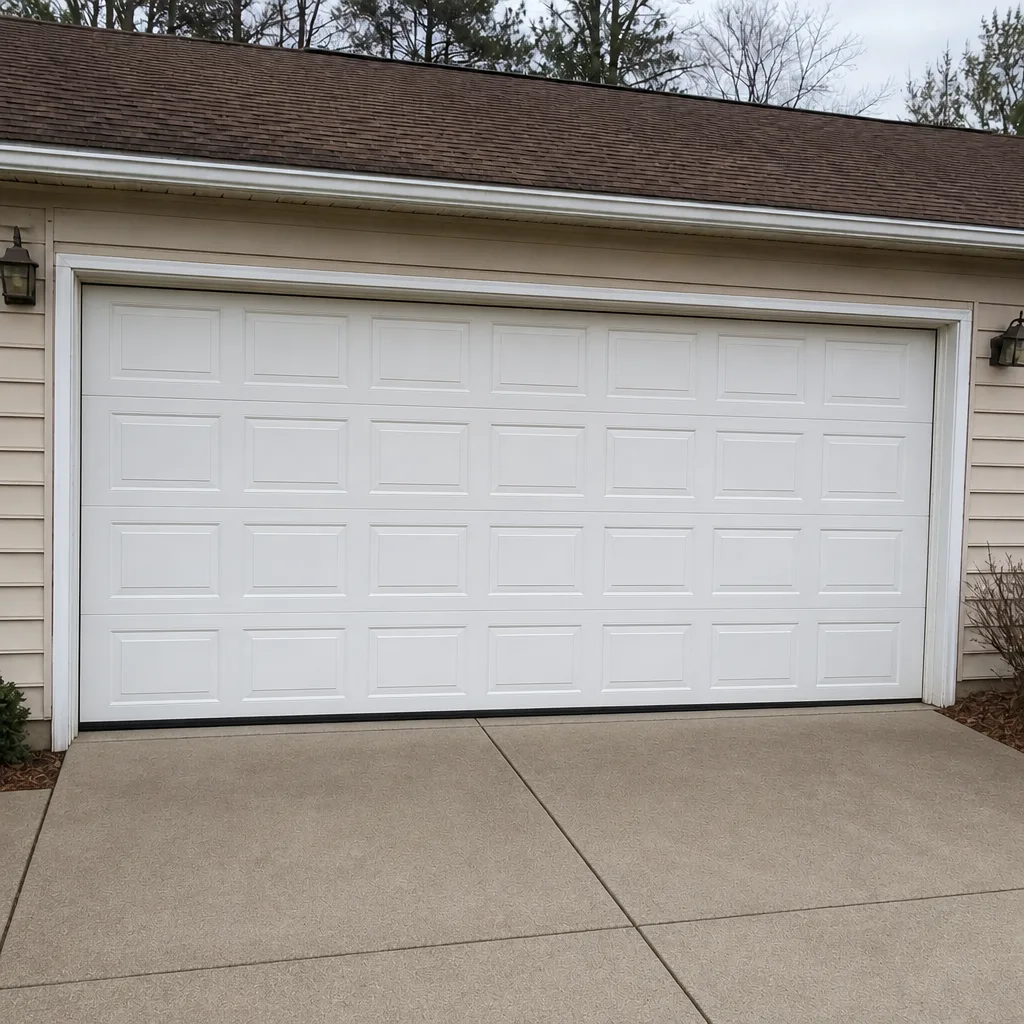 After
When to Call a Professional
Call us when the door won’t open or close, when you hear a loud crack from the torsion bar, when the door has come off one of its tracks, when the opener hums without moving the door, or when the safety reverse fails its test. Call if the door is visibly crooked on the frame, if a spring is visibly broken (a gap in the coil is the giveaway), if the door drops when you release the opener halfway up, or if a bottom seal is letting water into the garage. None of these is a wait-and-see item in a Canton home where the garage is the front door.
Spring repair specifically is safety work, not DIY work. Torsion springs sit at high tension, and the failure mode we most want to keep families away from is a spring that releases while someone is winding or adjusting it. A trained professional with the right tool is the only correct approach. That’s also why we treat it as its own service line rather than something to add on.
Canton Garage Door Repair Pros offers free estimates in Canton – call (877) 358-2572. We already know your system, whether it’s a LiftMaster smart opener, a Genie from the last decade, or an older Craftsman. We answer 24/7. Fast dispatch from 7am to 7pm, Sunday through Friday.
Frequently Asked Questions
Torsion spring repair in Canton typically runs $180-$340 for a single spring, and a matched pair is usually replaced together, so budget about twice that, $360-$680. The written estimate sets the final price, and there’s no repricing after work begins. Call (877) 358-2572 for an exact quote – estimates are free.
Yes, for most repair calls. We answer 24/7 and dispatch technicians 7am-7pm, Sunday through Friday. A spring that’s snapped or an opener that’s dead is exactly the kind of call we handle same-day when the schedule allows. Call (877) 358-2572 to check the current window.
No. The written quote you agree to before work starts is the price you pay. If the diagnosis changes the scope of the job, we write a revised quote and get your agreement before continuing. Call (877) 358-2572 – estimates are free and the quote is agreed before any work begins.
Yes. The local pro we connect you with is licensed and insured as Maryland requires. Our technicians have up to 8 years of experience working on the eight brands we service daily. Call (877) 358-2572 for a free estimate.
Yes, in most cases. Low-headroom Canton garages are usually handled with a low-headroom bracket and a torsion spring mounted at the header, and often with a jackshaft opener instead of a ceiling-mount unit. The measure has to happen first; a phone quote on a row-house installation isn’t reliable.
Clopay and Amarr are the two we see most in Canton, both with dependable parts availability. Wayne Dalton and Raynor are also solid choices, though certain discontinued panel profiles and decorative hardware take longer to source. The bigger factor than brand is whether the door fits your opening, so measure first, brand second.
The Bottom Line
Canton garages are not standard garages, and the door decisions here shouldn’t be standard catalog decisions. Measure your header clearance before anything else. Choose a material that resists humidity at the bottom rail: insulated steel is the safest bet. Get HOA approval in writing before you order. For alley-facing garages, put real money into a rubber bottom seal and a threshold rather than a premium door. Pick an opener that fits the ceiling, not one that fits a feature list. And on a broken spring, call.
For garage door repair, opener work, spring repair, or a full install, the right next step is a free measure and a written estimate. Call Canton Garage Door Repair Pros at (877) 358-2572. We answer 24/7. Fast dispatch from 7am to 7pm, Sunday through Friday.
Written by the team at Canton Garage Door Repair Pros.