
Last updated November 21, 2026
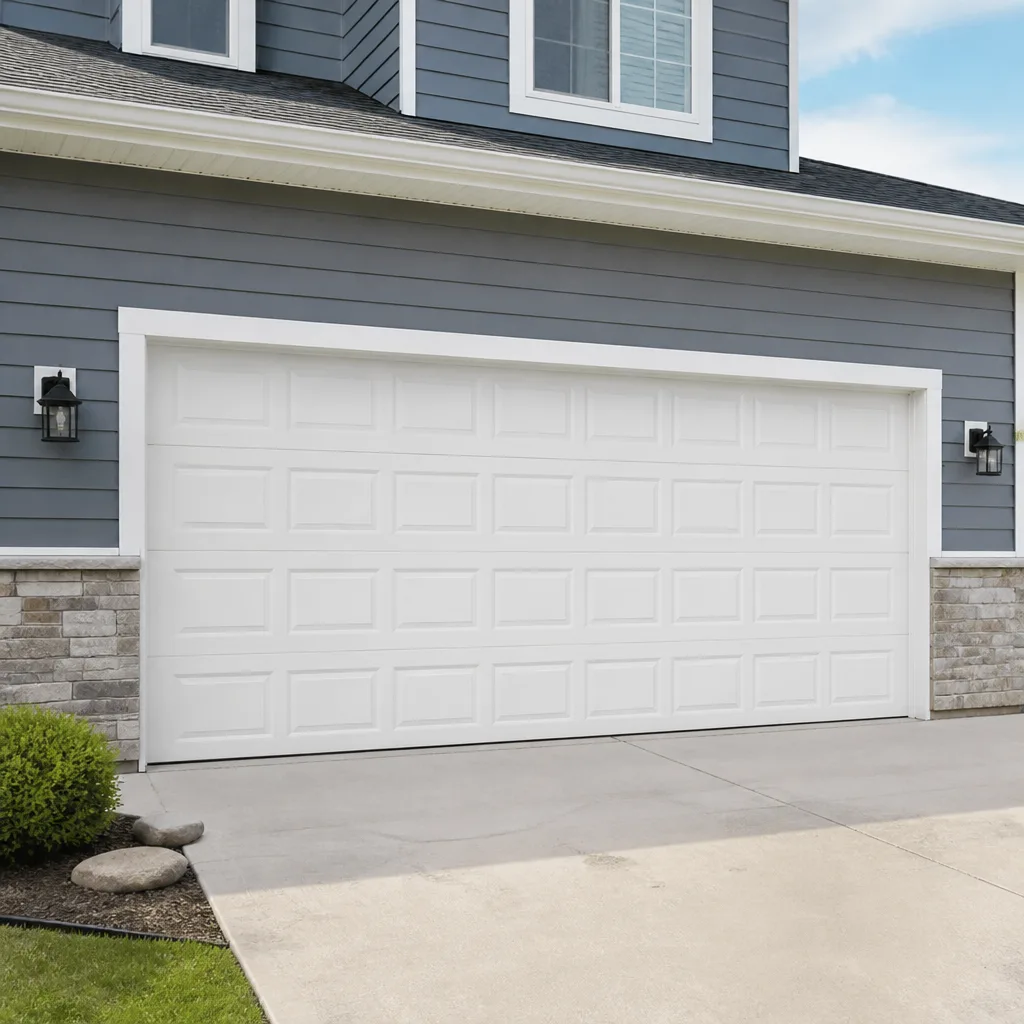 Raised-panel steel
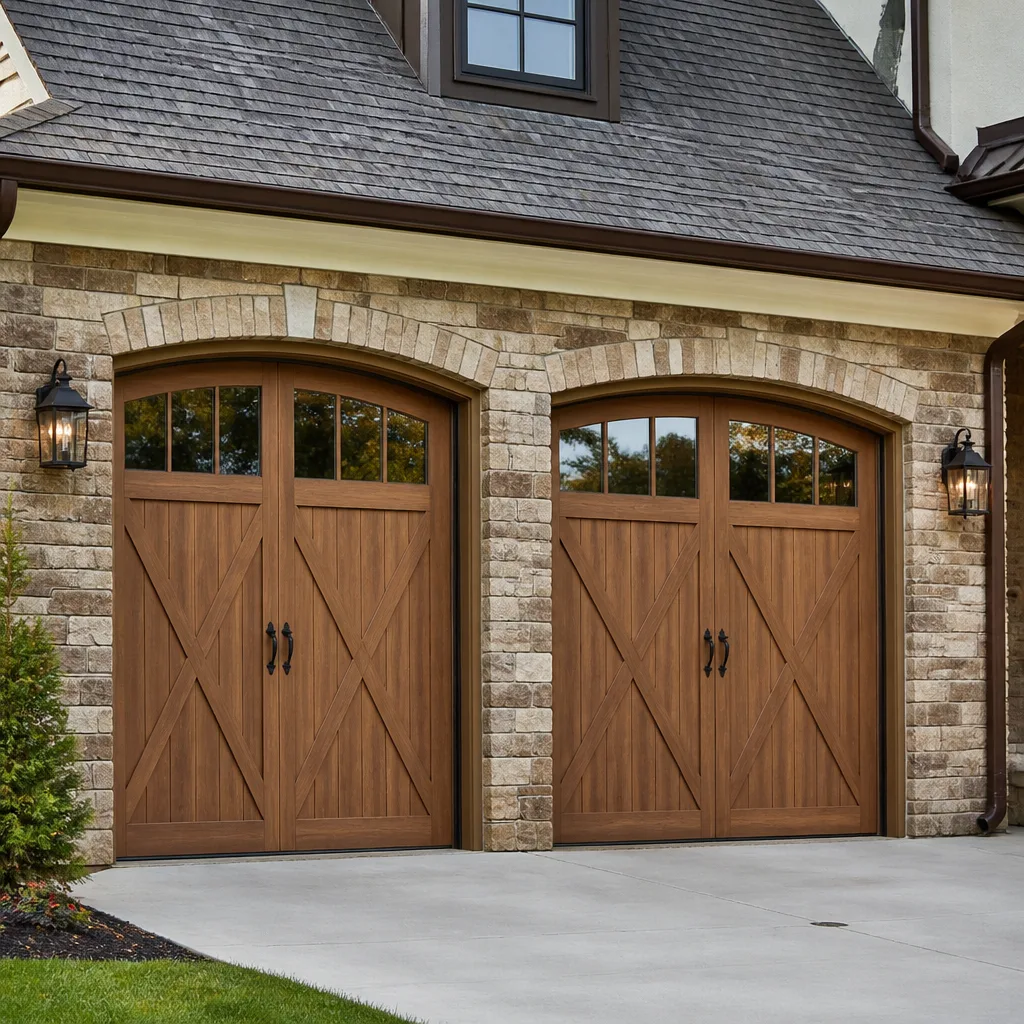 Carriage house
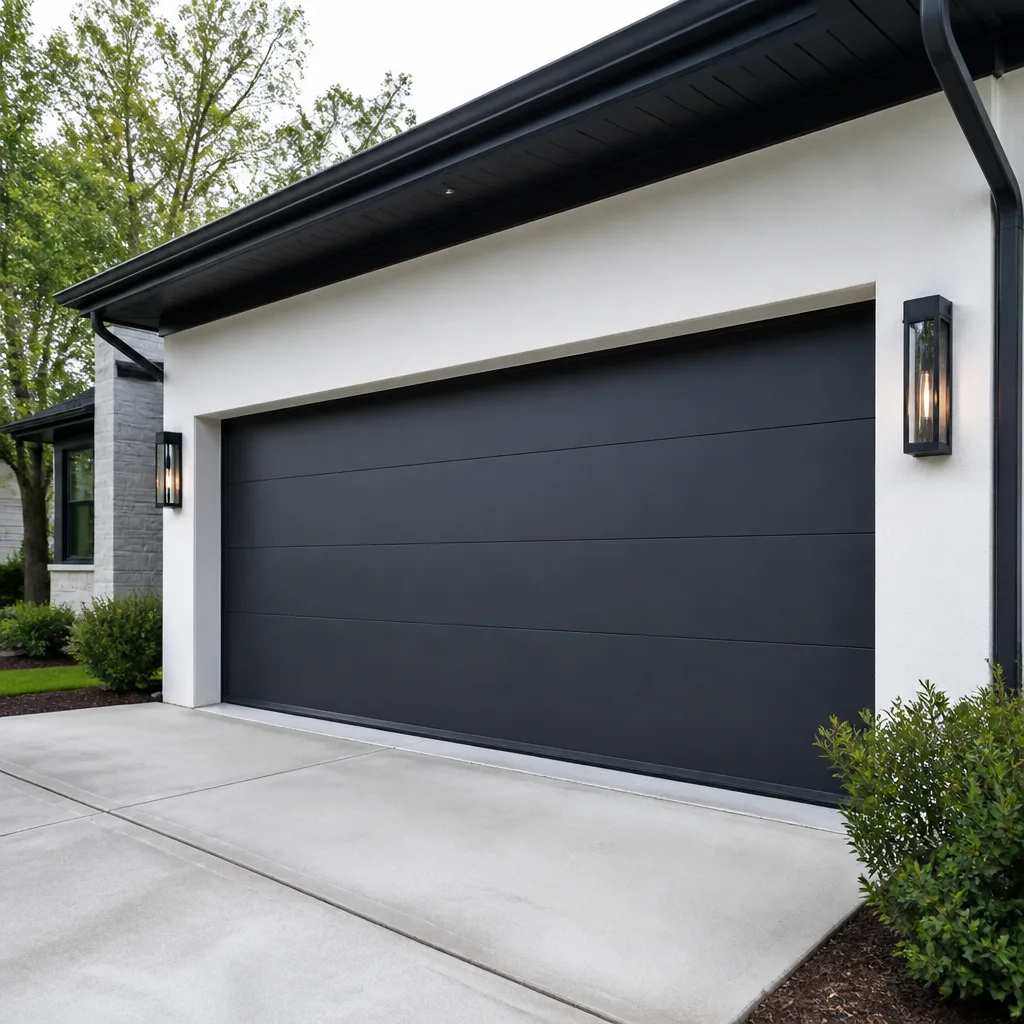 Modern flush
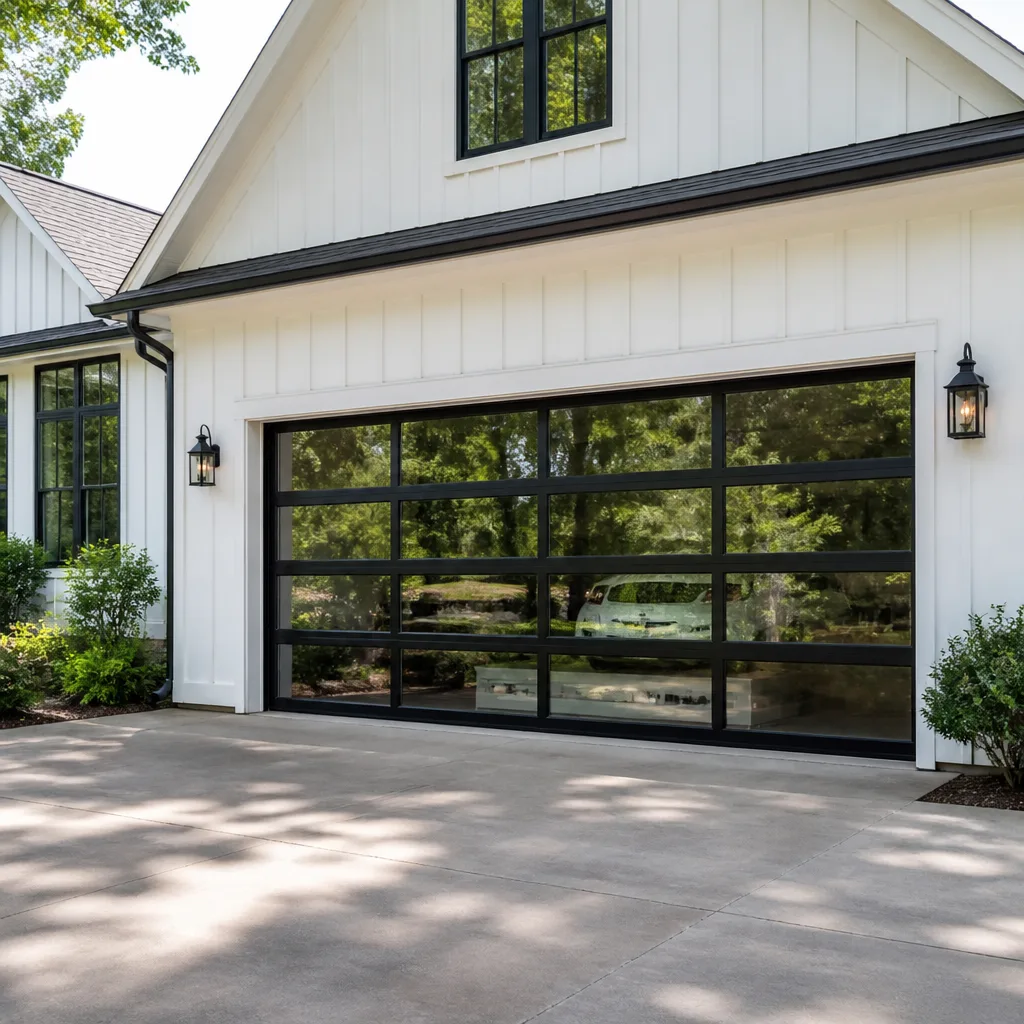 Full-view glass
 LiftMaster openers
 Chamberlain openers
Full 25-point door and opener safety check with every visit - springs, cables, rollers, tracks, and your LiftMaster or Chamberlain opener included
You get a price before we start. It does not change when the pro arrives.
Get your free estimateGarage Door Repair Maintenance Checklist for Canton Homeowners
Lubrication sits at the top of nearly every garage door checklist you’ll find online. Here’s what those lists leave out: the wrong lubricant on a nylon roller wears it out faster than no lubricant at all. Spray a solvent-based product on nylon and you’re stripping the material that lets it glide. The same mismatch happens with sealed bearings, torsion springs, and opener drive gears. A checklist that ignores your specific opener model and your door’s weight isn’t really maintenance guidance; it’s a liability disclaimer wearing a checklist costume.
What follows is organized by component, not by vague “inspect moving parts” language. You’ll get red-line indicators that mean stop, the annual versus semi-annual versus monthly breakdown so you’re not over-servicing parts that don’t need it, and the three checks Canton homeowners skip most often. Canton’s alleys collect grit that finds its way onto bottom brackets and hinges, and Baltimore-area humidity does the rest.
Quick Answer
A complete garage door maintenance checklist covers six components: springs, cables, rollers, tracks, the opener, and weatherstripping. Springs and cables get an annual visual check only. Rollers and hinges need lubrication every six months. Tracks should be wiped and checked monthly, and the opener’s force-sensitivity test should be run every six months. Anything involving a torsion spring, a frayed cable, or a bent track section is a stop-and-call situation, not a homeowner task.
Styles & brands we work with
- Raised-panel steel
- Carriage house
- Modern flush
- Full-view glass
- LiftMaster openers
- Chamberlain openers
Table of Contents
- Springs: The One Component You Never Touch
- Cables and Bottom Brackets: Canton’s Corrosion Hot Spots
- Rollers and Hinges: The Lubrication Most People Get Wrong
- Tracks: What Monthly Actually Means
- Opener Force-Sensitivity Testing by Brand
- Weatherstripping and Seals
- Annual vs. Semi-Annual vs. Monthly Schedule
- Common Mistakes to Avoid
Springs: The One Component You Never Touch
Springs are the highest-stakes part of any garage door system. A torsion spring under load stores enough energy to cause serious injury if it releases unexpectedly, and a winding bar that slips can do real damage in a fraction of a second. That’s why every responsible checklist treats springs as a look-only item.
What you can safely do is observe. Look at the spring above the door (torsion) or along the horizontal tracks (extension) and check for these signs:
- A visible gap in the coil. A torsion spring that has snapped usually shows a clean break somewhere along its length. That’s a red line: stop using the door and call for spring repair.
- Rust bloom or heavy pitting. Canton’s humid summers accelerate oxidation on spring coils. Surface rust alone isn’t a failure, but deep pitting weakens the wire.
- Sagging door or sluggish lift. If the door feels heavy by hand or the opener strains, the spring has likely lost tension.
- Loud bang from the garage. A torsion spring failing sounds like a firecracker. If you hear it, don’t run the opener to “test” what happened.
An extension spring setup adds a second red line: stretched or hooked safety cables that have come loose from their anchors. Those cables exist specifically to contain a broken spring. If one is dangling, the door is unsafe to operate.
We handle torsion and extension work because it’s the part of the job that punishes shortcuts. A matched pair of springs is almost always replaced together, since a new spring paired with a worn one will wear unevenly. Our technicians have up to 8 years of experience with both configurations, and we’ll tell you plainly when a repair is the right call versus a replacement. If you’re seeing any of the warning signs above, our garage door repair team can take a look and give you a written price before anything is touched.
Cables and Bottom Brackets: Canton’s Corrosion Hot Spots
Cables run from the bottom corners of the door up to the spring system, and they carry the same tension load the springs do. They’re also the component most affected by where you live. Canton’s alley-facing garages collect road grit, leaf debris, and the fine dust that blows off paving. That grit works into the cable strands and the bottom bracket, holds moisture against the steel, and starts the corrosion cycle earlier than you’d expect on an inland Maryland property.
In our experience, the bottom brackets and the lower hinge plates are where Canton homeowners find the first rust. Here’s what to check and how often:
- Monthly: Look at both cables where they meet the bottom corners. You’re checking for fraying, kinks, or a cable that has jumped its drum.
- Every six months: Wipe grit off the bottom bracket and lower hinges with a dry cloth. Don’t spray lubricant into the cable strands; that traps dirt.
- Annually: Check the bracket bolts for looseness with a hand wrench. Snug is enough. Over-tightening distorts the bracket.
Red lines on cables are simple: any frayed strand, any cable that’s come off its drum, or any bottom bracket that’s visibly cracked. A cable under tension that snaps can whip with force, so a damaged cable means stop operating the door and call. Cables and brackets are a trained-professional job, full stop.
Rollers and Hinges: The Lubrication Most People Get Wrong
This is where the average checklist does real harm. Rollers come in two common materials: steel and nylon. Steel rollers tolerate a silicone-based lubricant fine. Nylon rollers do not tolerate solvent-based sprays, and those are exactly what most people grab off the shelf. The solvent attacks the nylon, causing it to swell or craze, and the roller starts binding in the track within weeks.
The safe rule for homeowners: use a silicone-based lubricant on hinges and roller stems, and use it sparingly. A light film is enough. Excess attracts grit, and in Canton’s alley-adjacent garages grit is already working against you.
What to check on rollers and hinges:
- Rollers: Spin each one by hand with the door down. A worn roller wobbles or has a flat spot. Cracked nylon or chipped steel is a red line for that roller and worth replacing as a set.
- Hinges: Check for looseness and rust at the pivot points. A hinge that’s pulling away from the panel means the fasteners have stripped or the panel is fatigued.
- Noise: A squeal that returns within a week of lubricating usually means a worn roller, not a dry one.
This is the semi-annual task, not monthly. Over-lubricating is its own problem. Twice a year on hinges and roller stems keeps things quiet without turning your track into a dust magnet.
Tracks: What Monthly Actually Means
Track maintenance is simpler than most guides suggest, but it needs to be done on a schedule. Once a month, run a dry cloth along the inside of each track to remove grit. That’s the whole task. Don’t lubricate the track itself; grease in the track collects debris and causes the rollers to drag.
Along with the wipe-down, do a visual check:
- Alignment: The vertical and horizontal tracks should be parallel and evenly gapped. A door that’s rubbing on one side or drifting out of square points to a track problem.
- Loose brackets: Track brackets should be snug to the wall and the header. A bracket that’s pulled free is a red line.
- Dents and bends: A bent track section will bind a roller and eventually damage it. Any visible bend in the track is a call-a-professional item. Forcing a bend back by hand rarely gets the geometry right and can make the door unsafe.
If the door is off-track entirely, don’t run the opener to see how bad it is. Stop, and call for same-day help. We answer 24/7. Fast dispatch runs 7am to 7pm, Sunday through Friday, and a call outside those hours gets booked into the next opening.
Opener Force-Sensitivity Testing by Brand
Your opener has a safety reverse system. When the door meets resistance on the way down, the opener is supposed to reverse. That system drifts out of calibration over time, and testing it is a semi-annual task. The test itself doesn’t void your warranty on any of the major consumer brands; it’s the manufacturer-prescribed check.
Here’s the general procedure, which works across LiftMaster, Chamberlain, and Genie units:
- With the door fully open, place a solid object about the height of a 2×4 flat on the ground in the door’s path.
- Close the door using the wall control.
- The door should contact the object and reverse within a couple of seconds. If it presses down and strains before reversing, the sensitivity needs adjustment.
- Adjustment lives in different places by brand: LiftMaster and Chamberlain units typically use adjustment screws or a programmed menu on the wall control; Genie units vary by model, and some use a control panel setting.
- Retest after any adjustment and confirm the door reverses cleanly.
This is also where brand knowledge matters. A LiftMaster or Chamberlain unit with a Wi-Fi-enabled wall control has a different adjustment path than an older mechanical Genie. If your opener is a Raynor system paired with a modern head unit, the door’s balance affects how the opener behaves, and a door that’s out of balance will fool the force test. If the door doesn’t reverse reliably after adjustment, or the opener strains on the test, stop and call for garage door opener repair. That’s a safety system, not a convenience feature.
Weatherstripping and Seals
The rubber seal along the bottom of the door and the weatherstripping around the frame keep out water, wind, and pests. Canton’s humidity makes these seals work harder than they do in drier climates, and they degrade faster than most homeowners expect.
Check the bottom seal annually for cracks, flattening, or gaps where daylight shows through under the closed door. A hardened seal lets water in during heavy rain and lets heated or cooled air escape year-round. Frame weatherstripping along the sides and top should sit flush and flex when you press it; if it’s crumbled or pulling away, it’s due for replacement. Both are homeowner-replaceable parts, and both are cheap relative to what water intrusion costs. If the door’s bottom panel has rusted through where the seal failed, that’s when a panel replacement or a full garage door installation conversation makes sense.
Annual vs. Semi-Annual vs. Monthly Schedule
Over-servicing is a real problem. Lubricating low-wear parts too often attracts grit and accelerates wear. Here’s the breakdown that keeps your door in good shape without turning maintenance into a hobby:
- Monthly: Wipe the tracks dry. Check cables where they meet the bottom corners. Look at the seal for daylight gaps.
- Every six months: Lubricate hinges and roller stems with a silicone-based product. Run the opener force-sensitivity test. Wipe grit off the bottom brackets and lower hinges. Spin the rollers by hand.
- Annually: Inspect springs and cables visually for rust, gaps, and fraying. Check bracket bolts for snugness. Look at frame weatherstripping. Have a professional inspect the balance and spring tension, since that check requires the door to be disconnected and worked by hand.
That’s it. The parts that don’t need attention every month are low-wear by design, and the parts that need frequent attention are cheap to check. The annual balance and spring inspection is the one task worth handing off, because it’s the one that can hurt someone.
Common Mistakes to Avoid
- Spraying solvent-based lubricant on nylon rollers. It destroys the material faster than leaving it dry. Read the can before you spray.
- Greasing the tracks. Oil attracts grit, and in Canton’s alley-adjacent garages that grit is already a factor. Tracks stay dry and clean.
- Testing the door after a suspected spring break. If you heard a bang or the door won’t lift with the opener, stop. Running the opener on a broken spring puts all the load on the cable and header.
- Adjusting the force sensitivity setting to “make it close.” A door that won’t close usually has a balance or track problem, not a sensitivity problem. Raising the force setting masks a real fault.
- Ignoring rust on bottom brackets and hinges. Canton humidity and alley grit combine to start corrosion early. A wiped-down bracket lasts years longer than a neglected one.
- Replacing the whole door for a single failed panel. Panel replacements are a normal repair. Push back if you’re told the whole door has to go for one dent or one rusted panel.
- Skipping the balance check because the door “still opens.” A door that lifts but strains is telling you the spring is losing tension, and the opener is absorbing the difference. That shortens the opener’s life.
See the difference
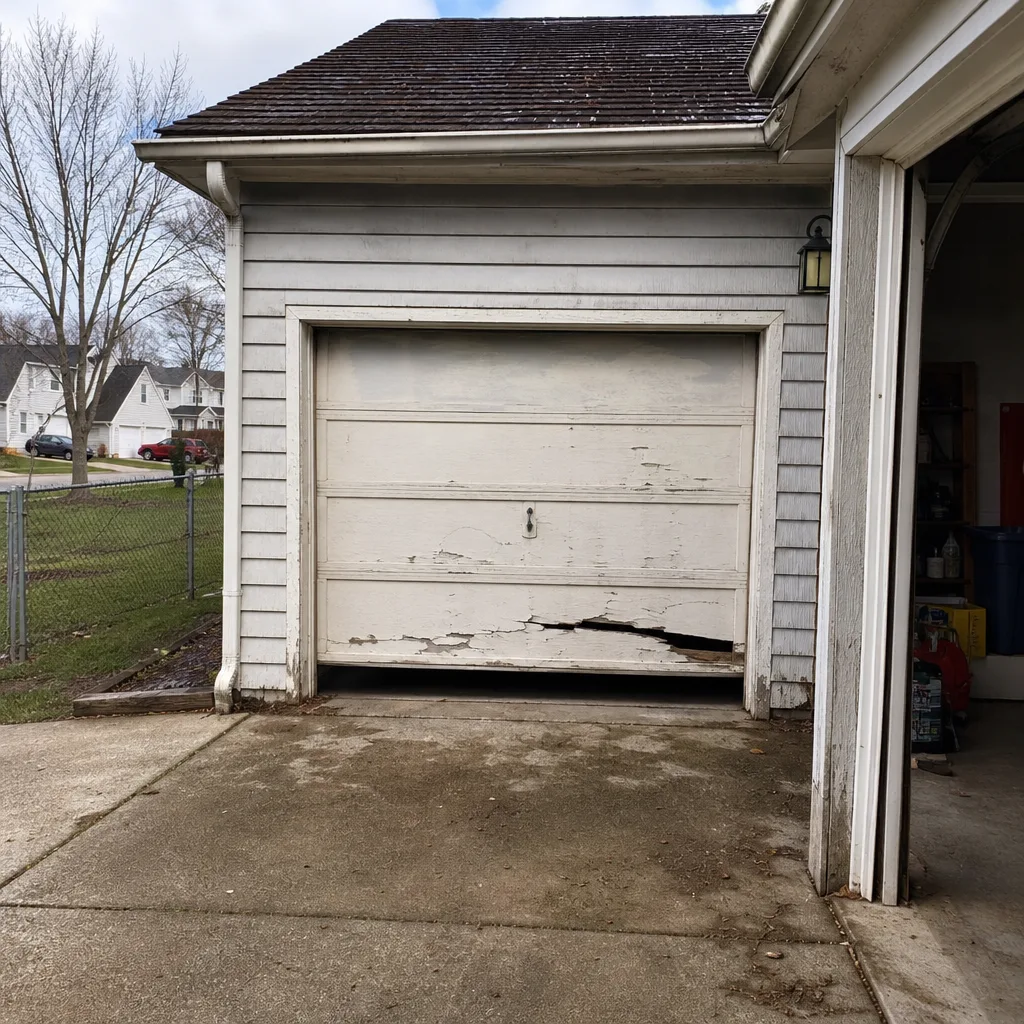 Before
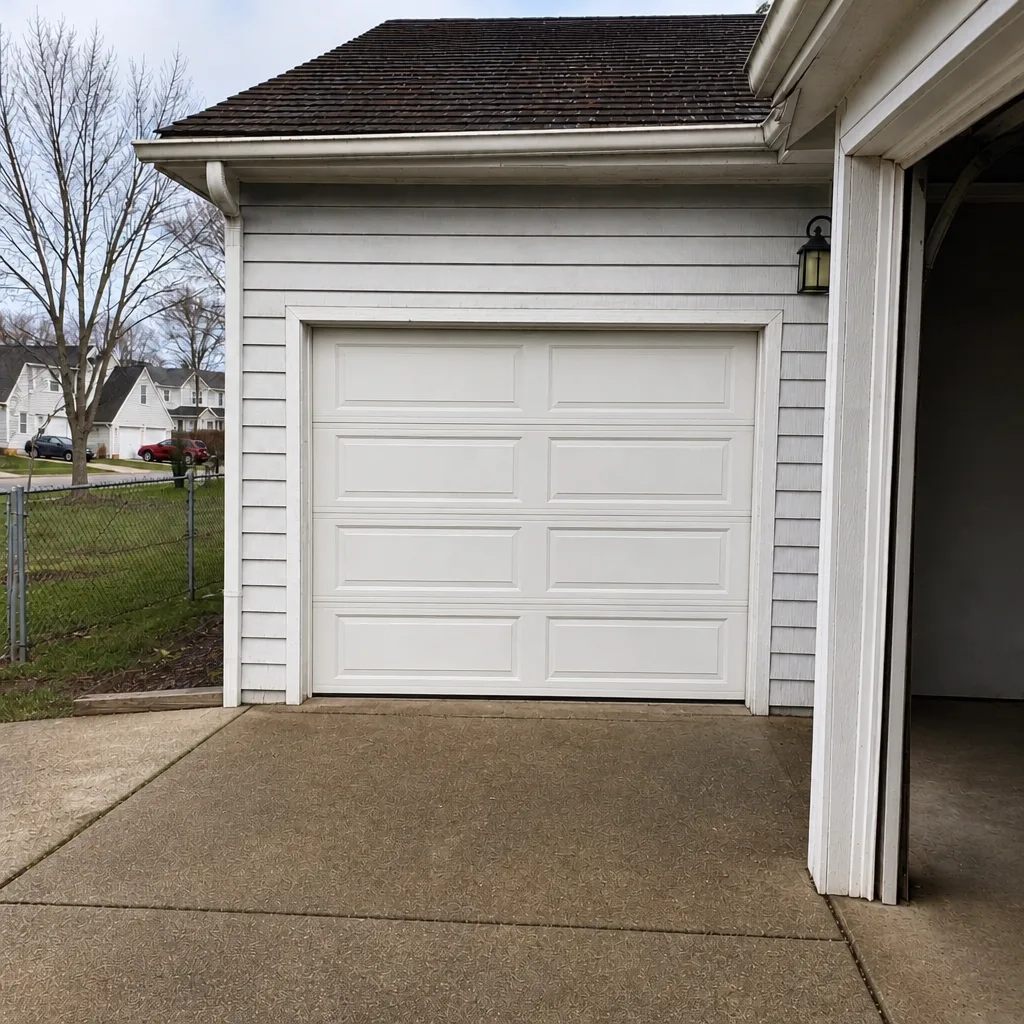 After
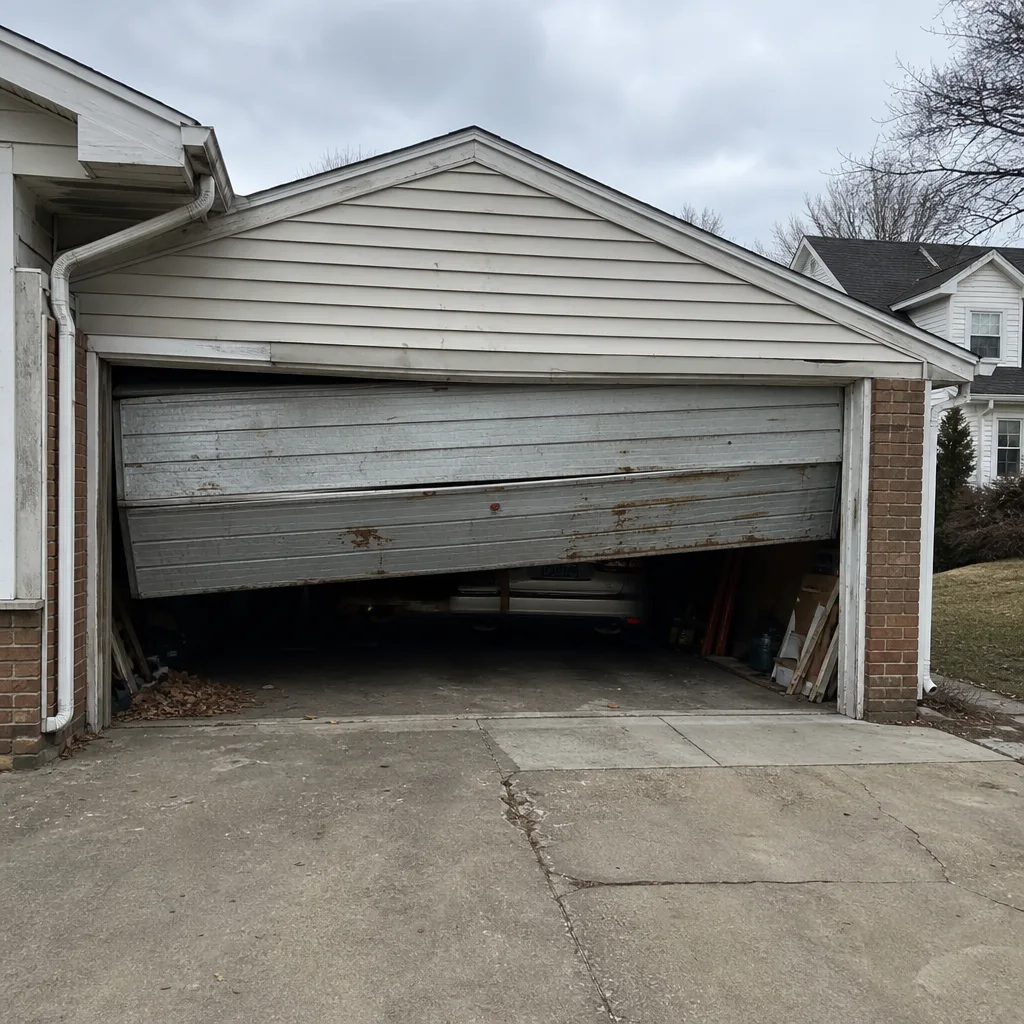 Before
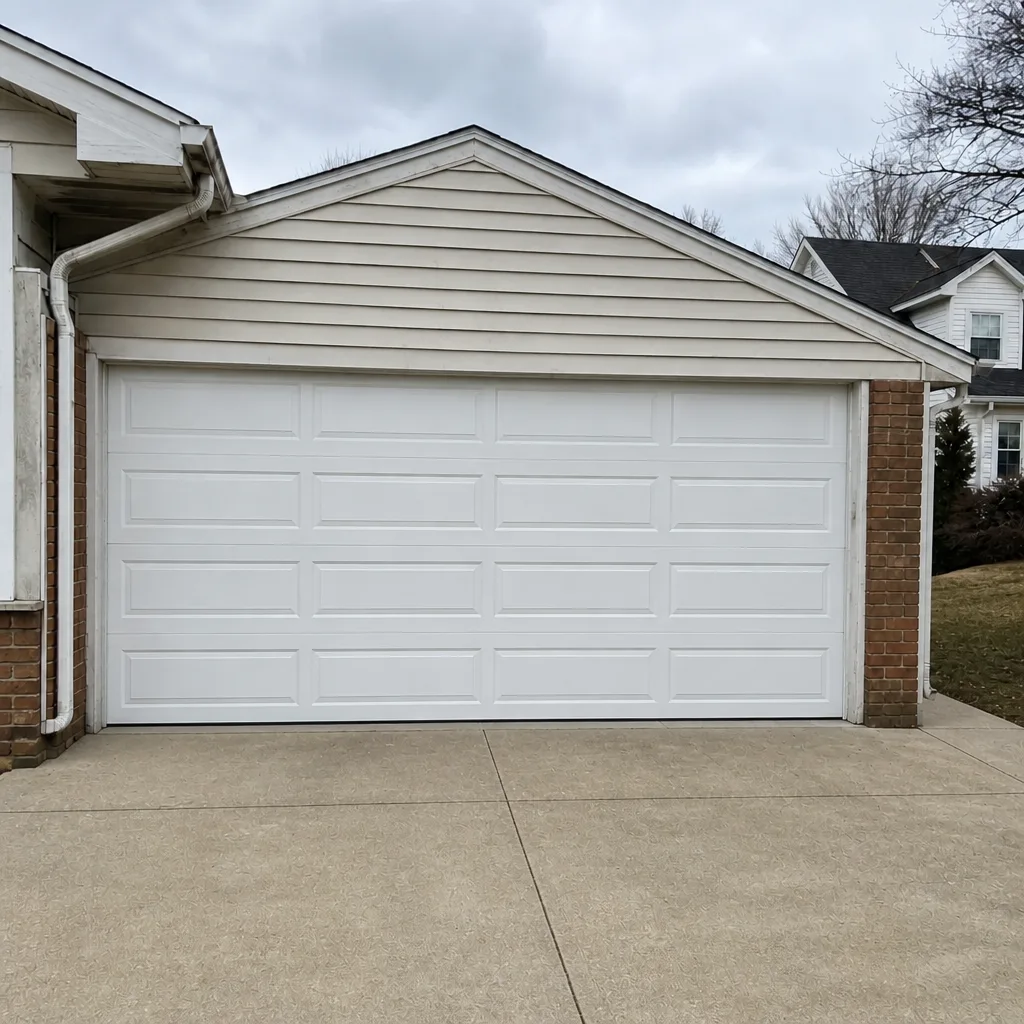 After
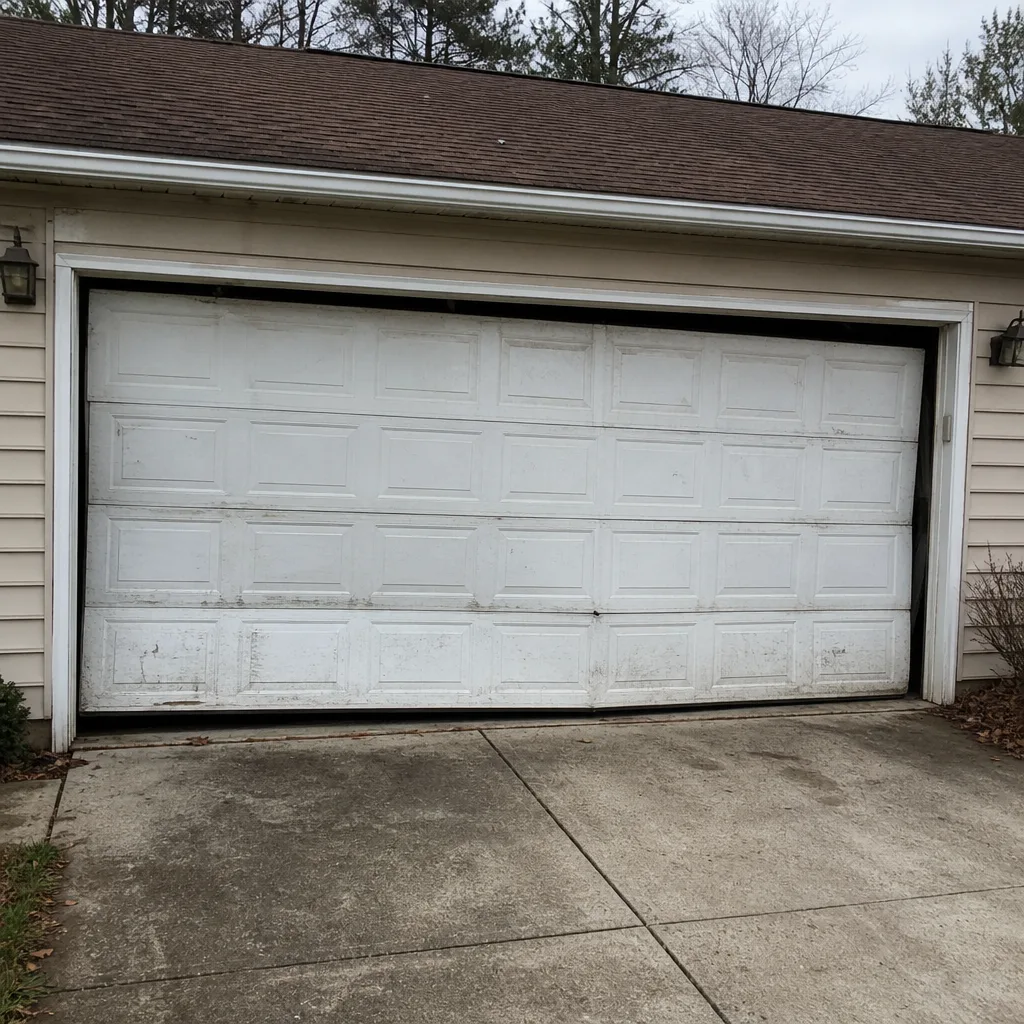 Before
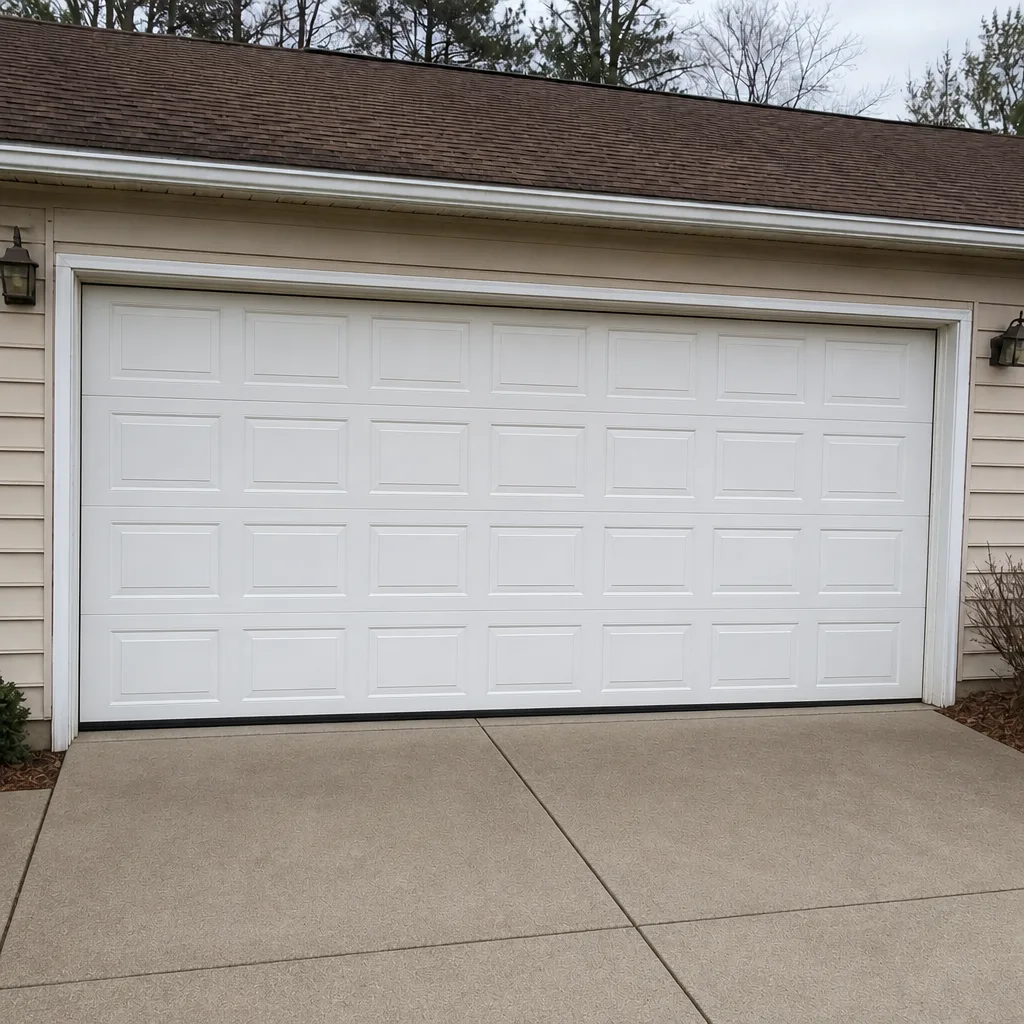 After
When to Call a Professional
Call a professional the moment you see a snapped spring, a frayed or off-drum cable, a bent or off-track door section, or an opener that fails the force-sensitivity test after adjustment. Those are the items where a homeowner’s best tool is the phone. A door that won’t lift, a door that reverses at the halfway point, or a door that’s become noticeably heavier by hand also deserve a call. Springs, cables, and opener safety systems are trained-professional territory, and no checklist should tell you otherwise.
For inspection and routine work, a professional can do the annual balance and spring check and confirm the parts that matter are sound. Canton Garage Door Repair Pros offers free estimates in Canton. Call (877) 358-2572. We answer 24/7. Fast dispatch from 7am to 7pm, Sunday through Friday, with same-day service available for urgent repairs. The price is quoted and agreed before any work starts.
Frequently Asked Questions
A full professional service is an annual item, with homeowner-level checks monthly and lubrication plus the opener safety test every six months. Canton’s humidity means bottom brackets and hinges need more attention than they would in a drier climate. A professional inspection once a year covers the balance and spring tension checks that require the door to be disconnected.
Yes, but only with the right product. Use a silicone-based lubricant on roller stems and hinges, and apply it sparingly. Never use a solvent-based spray on nylon rollers; it damages the material. If you’re not sure what your rollers are made of, leave it to a technician on the next service call.
A visible gap in the torsion spring coil, a loud bang from the garage, or a door that suddenly won’t lift with the opener all point to a broken spring. Stop operating the door and call for repair. Don’t run the opener to test it. Call (877) 358-2572 for a free estimate.
No. The safety reverse test is the manufacturer’s own recommended check and is listed in owner’s manuals for LiftMaster, Chamberlain, Genie, and other major brands. What can cause problems is adjusting the force setting to mask a balance issue, since the underlying fault stays and the safety system gets less sensitive.
Often maintenance. A squeal or rattle that goes away after lubricating the hinges and roller stems is normal wear. Noise that returns within a week of lubricating usually means a worn roller or hinge that needs replacement. Call (877) 358-2572 for an exact quote; estimates are free.
Most cities require a permit for a full door replacement, so check with your city’s building department before work is scheduled. Rules vary by jurisdiction, and a permit requirement can affect timing. We can tell you what the process typically involves during your estimate.
The Bottom Line
Maintenance on a garage door isn’t complicated, but it has to be matched to the component. Springs and cables get an annual look and nothing more. Rollers and hinges get silicone, not solvent, twice a year. Tracks stay dry and wiped. The opener’s force test runs every six months, and the force setting never gets raised to hide a balance problem. Canton’s alley grit and humid summers make bottom brackets and hinges the rust hot spots to watch. Any red line on a spring, cable, track, or safety reverse system means call a professional. We’re here when that happens.
Call (877) 358-2572 for a free estimate. We answer 24/7. Fast dispatch from 7am to 7pm, Sunday through Friday.
Written by the team at Canton Garage Door Repair Pros.